Toyota Supra MK4 2027: A Modern Revival
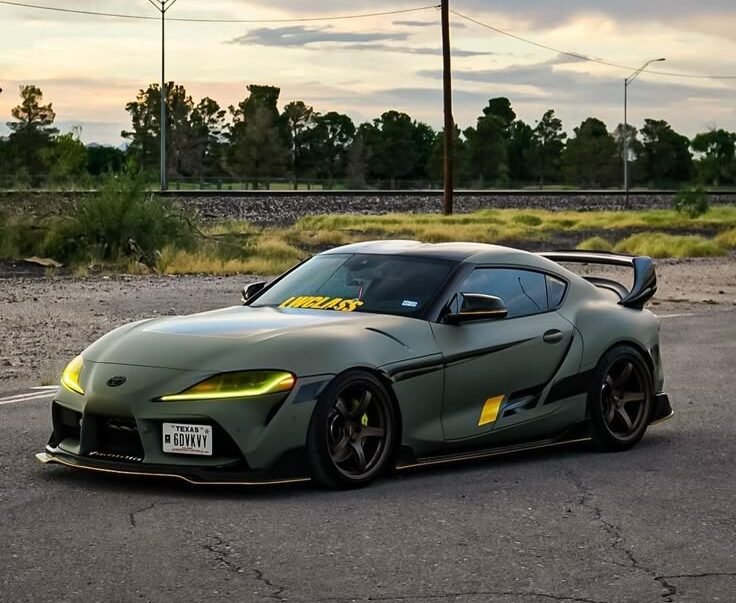
The Toyota Supra has always occupied a special place in automotive culture. The fourth-generation model, known as the A80 or MK4, produced from 1993 to 2002, became legendary for its balanced chassis, the unbreakable 2JZ-GTE engine, and its starring role in films and video games. More than two decades after production ended, enthusiasts continue to celebrate it as the purest expression of the nameplate.
In 2027, Toyota appears ready to answer those long-standing calls with a spiritual successor that reinterprets the MK4 for a new era. While the fifth-generation GR Supra (A90/A91) ends production in 2026 after a successful but BMW-shared run, the next chapter is expected to be developed entirely in-house by Toyota Gazoo Racing. Early reports and concept work point toward a 2027 model that deliberately channels the proportions, character, and emotional appeal of the original MK4 while delivering modern performance, technology, and usability.
This article examines the anticipated 2027 Toyota Supra MK4-inspired model across design, performance, technology, comfort, everyday practicality, and the driving experience it promises to deliver.
Design: Heritage Refined for the Present
The original MK4 Supra is instantly recognizable for its long hood, short rear deck, muscular fenders, and flowing greenhouse. Any modern revival must respect those proportions while meeting contemporary aerodynamic and safety requirements.
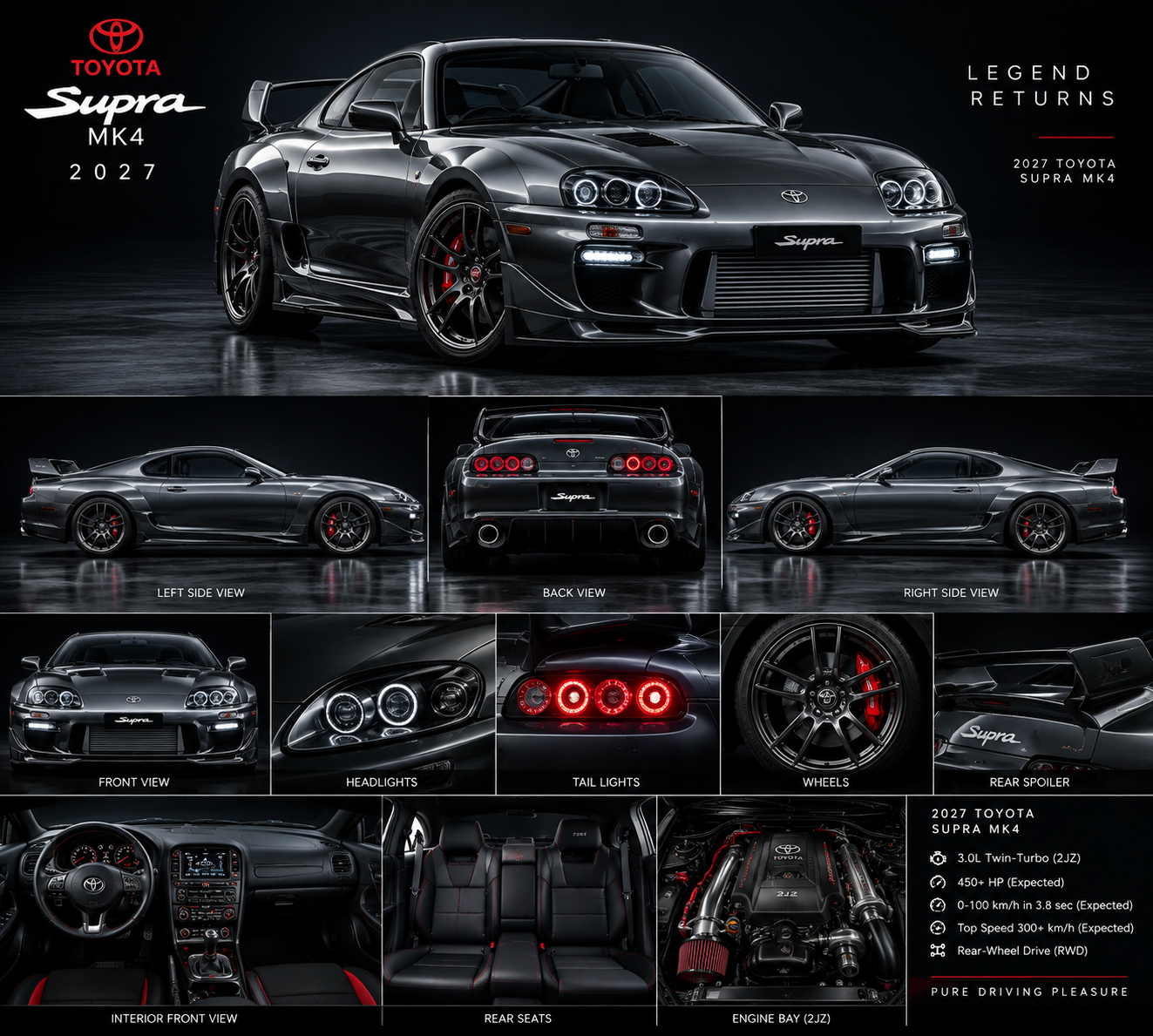
Concept renders and insider descriptions suggest the 2027 model will retain the classic MK4 silhouette but with tighter, more precise surfacing. The front end is expected to feature a lower, wider grille opening, sharp LED headlights with distinctive daytime running light signatures, and carefully sculpted air intakes that improve cooling without looking aggressive for the sake of aggression. The side profile should keep the classic “double bubble” roof influence and pronounced rear haunches, while the rear will likely incorporate modern full-width LED taillights and a subtle diffuser that pays homage to the original without excess.
Materials and details will reflect current Toyota design language: high-quality paint finishes, optional carbon-fiber accents, and carefully chosen wheel designs (likely 19- or 20-inch) that fill the arches properly. The overall effect aims to feel like a natural evolution rather than a retro pastiche — something that looks contemporary yet immediately identifiable as a Supra.
Performance: Power with Precision
Performance remains the heart of any Supra. The classic MK4’s twin-turbo 3.0-liter inline-six delivered strong mid-range torque and legendary durability. The 2027 interpretation is expected to move away from the BMW-sourced engines of the previous generation and adopt a Toyota-developed powertrain.
Current industry reports point to a 2.0-liter turbocharged four-cylinder engine paired with hybrid assistance, producing a combined output in the 400–500 horsepower range. This setup should deliver strong acceleration — likely low-to-mid four-second 0–60 mph times — while offering better efficiency and lower emissions than a pure high-displacement engine. A rear-wheel-drive layout is expected to remain, preserving the classic Supra driving character, with the possibility of a six-speed manual transmission alongside an advanced automatic.
Chassis development under Gazoo Racing should emphasize balance and feedback. Adaptive dampers, a well-sorted multi-link rear suspension, and precise steering geometry are anticipated to give the car both daily composure and track-day capability. Braking systems will be high-performance units capable of repeated hard stops, while tire packages will balance grip with acceptable noise and wear for road use.
The goal is not simply to match the old 2JZ’s numbers on paper, but to deliver a more complete, modern performance envelope that feels exciting yet approachable.
Modern Technology: Connected Without Distraction
A 2027 sports car cannot ignore the digital age. The new Supra is expected to feature a driver-focused digital instrument cluster and a central touchscreen supporting wireless Apple CarPlay and Android Auto. Toyota’s latest safety suite — adaptive cruise control, lane-keeping assist, automatic emergency braking, and blind-spot monitoring — should be standard or widely available, helping the car meet modern regulatory and consumer expectations.
Performance-oriented technology will likely include selectable drive modes (Comfort, Sport, and Track), a configurable digital gauge display, and possibly a limited telemetry or track-data system for enthusiasts. Connectivity features such as over-the-air software updates and a remote smartphone app for climate preconditioning or vehicle status checks are also probable.
Importantly, the technology package is expected to remain secondary to the driving experience. Physical controls for key functions, a clear and logical interface, and minimal distraction should keep the focus where it belongs: on the road and the driver’s connection to the car.
Comfort and Everyday Practicality
Sports cars often force buyers to choose between excitement and usability. The original MK4 was relatively practical for its era, offering a usable trunk and a cabin that could handle longer journeys. The 2027 model is expected to improve on that foundation.
The cabin should feature supportive yet comfortable seats with good long-distance bolstering, high-quality materials, and improved sound insulation compared with older pure sports cars. Climate control, USB-C charging ports, and thoughtful storage solutions will make daily use more convenient. Visibility, often a weak point in low-slung coupes, is likely to receive careful attention through better mirror placement, camera systems, and optimized window design.
Luggage space will remain limited by the two-seat, fastback layout, but a reasonably sized trunk and fold-down rear shelf (or similar) should allow for weekend trips or light shopping. Ride quality, while firm in Sport modes, is expected to offer a compliant Comfort setting suitable for imperfect city roads. Fuel efficiency from the hybrid system should also make ownership more practical than older high-performance models.
Smooth Driving Experience
Beyond raw numbers, the defining quality of a great sports car is how it feels from behind the wheel. The anticipated 2027 Supra aims to deliver a smooth, engaging, and confidence-inspiring experience.
Steering should be precise and communicative, with progressive weighting that builds naturally as cornering forces increase. The chassis is expected to feel planted yet lively, with progressive grip and predictable breakaway characteristics. The hybrid powertrain, if executed well, can provide instant torque fill for responsive low-speed behavior while the turbocharged engine delivers strong mid- and high-range pull.
Transmission choices will play a major role. A well-sorted manual would offer pure engagement for enthusiasts, while a quick-shifting automatic would provide seamless everyday usability. Noise, vibration, and harshness levels should be controlled enough for comfortable highway cruising, yet the car must still produce an emotionally satisfying exhaust note when driven hard.
In short, the driving experience should feel special without being exhausting — a car that rewards skilled inputs on a winding road while remaining composed and enjoyable on the daily commute.
Final Thoughts
The 2027 Toyota Supra MK4-inspired model represents more than just another sports car. It is an opportunity for Toyota to reconnect with the pure, driver-focused character that made the original MK4 an icon, while meeting the demands of a new decade.
By combining classic proportions with modern engineering, a potent yet efficient hybrid powertrain, thoughtful technology, and genuine everyday usability, Toyota has the chance to create a car that satisfies both longtime enthusiasts and a new generation of drivers. Success will depend on execution: the right balance of nostalgia and progress, performance and refinement, emotion and practicality.
If Toyota Gazoo Racing delivers on the promise currently circulating in the industry, the 2027 Supra could once again become the benchmark Japanese sports coupe — a machine that feels special every time the key is turned, whether the journey is a short city run or a long weekend drive through the mountains.
The legend of the MK4 never truly faded. In 2027, it may simply find a new chapter.