2027 McLaren 750S Explained
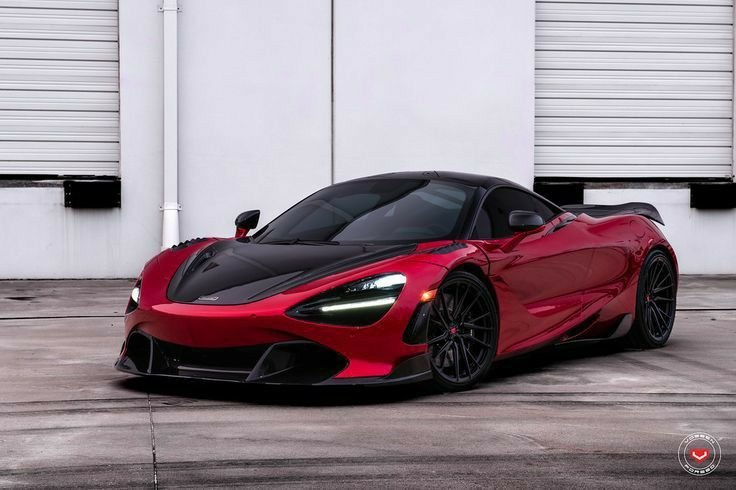
The 2027 McLaren 750S continues the Super Series legacy as one of the purest driver’s supercars available. Evolved from the acclaimed 720S with lessons from the hardcore 765LT, it delivers blistering performance while remaining surprisingly usable on the road. Available as a Coupe or Spider, plus a limited Le Mans Edition, the 750S pairs a potent twin-turbo V8 with McLaren’s advanced carbon architecture and third-generation Proactive Chassis Control. Pricing starts around $370,000–$378,000 for the Coupe and rises for the Spider and special editions.
This article covers the key areas requested: overall information, the competition-oriented engine and chassis, driving modes and settings (including M Mode / McLaren Control Launcher), and safety plus driver-assistance features.
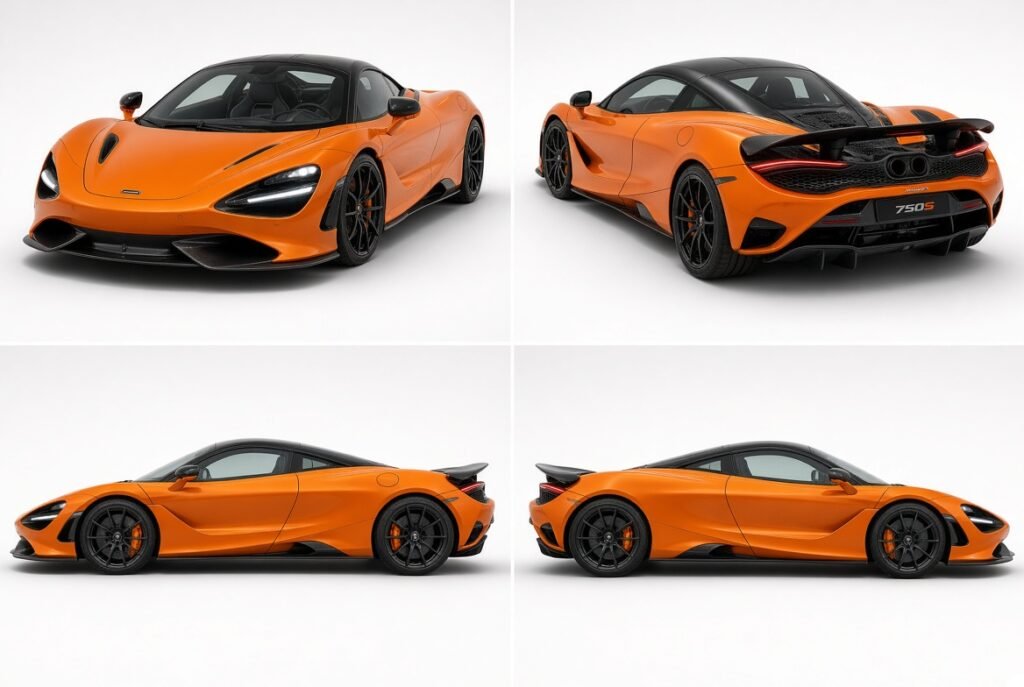
Core Specifications and Performance Overview
At the heart of the 2027 750S sits a mid-mounted 4.0-liter twin-turbocharged V8 (internally designated M840T). It produces 740 horsepower (750 PS) at 7,500 rpm and 590 lb-ft (800 Nm) of torque at 5,500 rpm. Compared with the 720S, this represents gains of roughly 30 hp and 22 lb-ft, achieved through revised engine software, higher turbo boost pressure, and lightweight pistons carried over from the 765LT.
Power is sent exclusively to the rear wheels via a 7-speed dual-clutch Seamless Shift Gearbox (SSG) with a shortened final-drive ratio for sharper in-gear acceleration. McLaren claims 0–60 mph in approximately 2.8 seconds (independent tests have recorded as low as 2.3–2.7 seconds depending on conditions and rollout). The quarter-mile arrives in the low-to-mid 10-second range, and top speed is rated at 206 mph (332 km/h). Carbon-ceramic brakes (CCM-R) with six-piston front and four-piston rear calipers provide fade-resistant stopping power.
The carbon-fiber Monocage II structure keeps curb weight low—around 3,062–3,206 lbs depending on configuration—delivering an outstanding power-to-weight ratio. Active aerodynamics, including a movable rear wing that acts as an Airbrake under heavy braking, generate meaningful downforce while optimizing drag when accelerating.
For 2027, the range includes the standard Coupe and Spider plus the limited Le Mans Edition (only 50 units). The Le Mans version adds a High Downforce Kit with a revised front bumper, enlarged splitter, raised rear spoiler, and additional louvers for approximately 10% more downforce, along with unique styling cues inspired by McLaren’s racing heritage.
Competition Engine Details
The 4.0-liter twin-turbo V8 is a pure competition-bred unit refined for road use. Features include electrically actuated twin-scroll turbochargers, dry-sump lubrication, and a high-revving character that encourages aggressive driving. Software calibration and increased boost deliver the extra power without sacrificing throttle response. The engine’s mid-mounted position contributes to near-perfect weight distribution and exceptional balance.
The 7-speed dual-clutch transmission supports multiple shift strategies. In higher powertrain modes it delivers lightning-fast, race-car-like shifts. Launch Control is available for maximum standing-start acceleration, while a revised kickdown strategy improves overtaking response. The powertrain remains rear-wheel-drive only, emphasizing driver engagement over all-weather traction aids found in some rivals.
Competition Chassis and Proactive Chassis Control III
The chassis is where the 750S truly distinguishes itself. Built around the carbon-fiber Monocage II, it uses double-wishbone suspension front and rear with adaptive dampers. The standout system is Proactive Chassis Control III (PCC III), McLaren’s third-generation linked-hydraulic suspension.
Unlike conventional setups that rely on mechanical anti-roll bars, PCC III uses hydraulic circuits connecting the dampers. This allows independent control of ride and roll stiffness. Passive coil springs manage ride frequency, while semi-active dampers control compression and rebound. The result is exceptional body control with a surprisingly compliant ride—something rare in the supercar class.
Compared with the 720S, the 750S features a 6 mm wider front track, softer front springs (approximately 3%), stiffer rear springs (approximately 4%), revised geometry, and updated accumulator tuning. These changes improve steering feedback, cornering balance, and high-speed stability while enhancing everyday ride quality. An electro-hydraulic power-assisted steering system (with an auxiliary pump for precision) delivers pure, communicative feedback free of the artificial feel common in modern electric systems.
The Active Rear Wing / Airbrake further enhances chassis performance by increasing downforce under braking and reducing drag under acceleration. Optional track-focused packages and the Le Mans High Downforce Kit push aerodynamic capability even higher.
Driving Settings, Modes, and M Mode (McLaren Control Launcher)
Driver control is central to the McLaren experience. The 750S uses a clean instrument binnacle with rocker switches on either side of the digital display—one for Handling modes and one for Powertrain modes—allowing changes without removing hands from the wheel.
Handling Modes (affecting Proactive Chassis Control III):
- Comfort: Softest suspension setting for compliant ride quality while retaining good body control.
- Sport: Firmer damping and increased roll stiffness for sharper responses; active aerodynamics become more aggressive.
- Track: Stiffest settings for near race-car body control and maximum grip. Electronic Stability Control remains active but allows greater yaw.
Powertrain Modes:
- Comfort: Smoother throttle mapping and shift strategy for everyday driving.
- Sport: Sharper response and quicker shifts.
- Track: Maximum aggression in throttle, shift speed, and engine character.
These can be mixed independently, creating nine primary combinations. Additional features include Variable Drift Control (VDC), which lets the driver adjust traction-control intervention independently of ESC, and Launch Control for optimized starts.
M Mode / McLaren Control Launcher (MCL):
A signature feature is the McLaren Control Launcher, activated by a dedicated button featuring the McLaren Speedmark logo. Drivers can save a fully customized combination of aero, handling, powertrain, and transmission settings as a single preferred profile. One press recalls the exact setup—ideal for switching between road comfort and track aggression instantly. This “M Mode” style personalization adds a layer of convenience and driver focus unique to modern McLarens.
The digital instrument cluster changes themes and information density according to the selected modes, keeping critical data (revs, gear, temperatures, and G-forces) clear and relevant.
Safety and Driver Assistance Features
True to its driver’s-car philosophy, the 750S prioritizes engagement over heavy electronic intervention. Traditional advanced driver-assistance systems such as lane-keep assist or adaptive cruise control are not offered. Instead, McLaren focuses on systems that protect the car and enhance control without diluting the experience.
Standard safety and assistance equipment includes:
- Electronic Stability Control (ESC) with multiple intervention levels
- Traction control and ABS with Brake Assist
- Brake-Steer and Electronic Brake Pre-Fill for sharper turn-in and response
- Hill Hold Control
- Front and rear parking sensors
- Rearview camera
- Tire Pressure Monitoring System (TPMS)
- Dual-stage front airbags, side airbags, and knee airbags
- Seat-belt pretensioners and impact sensors (fuel cut-off, door unlock, post-collision systems)
- Alarm and immobilizer systems
Optional features:
- 360-degree camera system for easier maneuvering
- Front-axle lift system (raises the nose to clear steep driveways, speed bumps, and obstacles—standard or no-cost on many configurations)
- Volumetric alarm upgrade for enhanced interior intrusion detection
Carbon-ceramic brakes provide exceptional stopping power and resistance to fade, while the rigid Monocage structure and crumple zones contribute to occupant protection. As a low-volume exotic, the 750S is not typically subjected to standard NHTSA or IIHS crash testing programs.
Everyday Usability and Final Thoughts
Despite its extreme performance, the 750S remains more livable than many rivals. The Comfort mode and PCC III suspension deliver a ride that can embarrass less focused sports cars. The front-lift system, clear digital displays, and customizable M Mode settings make daily driving or long-distance touring surprisingly feasible (within the constraints of limited cargo space).
The 2027 model year adds the exclusive Le Mans Edition and minor updates such as new colors and wheel designs, keeping the platform fresh while the pure V8 era continues. With its combination of competition-derived engine, advanced hydraulic chassis, highly configurable driving modes, and focused safety systems, the McLaren 750S remains a benchmark for pure, engaging supercar performance in the United States and beyond.
Whether on a winding canyon road or a closed circuit, the 750S rewards skilled drivers with precision, feedback, and sheer capability that few cars can match




$$